
Marvel Studios rarely wastes words. That is why a single line from the newly released Avengers: Doomsday trailer — “Thor will return” — has triggered more unease than reassurance among long-time fans.
On the surface, the teaser appears restrained, almost reverent. There is no multiverse chaos, no rapid-fire action montage, no triumphant score. Instead, the trailer centers on Thor (Chris Hemsworth) in a moment of reflection, speaking not as a god of thunder but as a father. He prays to Odin. He speaks of protection. He hopes to return to his daughter, Love.
For a franchise built on spectacle, this tonal choice is striking — and telling.
A trailer that prepares the audience, not the battlefield
The Doomsday teaser does not sell victory. It sells consequence.
Thor’s dialogue is structured around survival, not conquest. He does not ask for power to defeat an enemy; he asks for the strength to come back. In cinematic storytelling, this distinction is rarely accidental. Heroes who expect to win do not frame their journeys as uncertain returns. That language is usually reserved for characters standing on the edge of sacrifice.
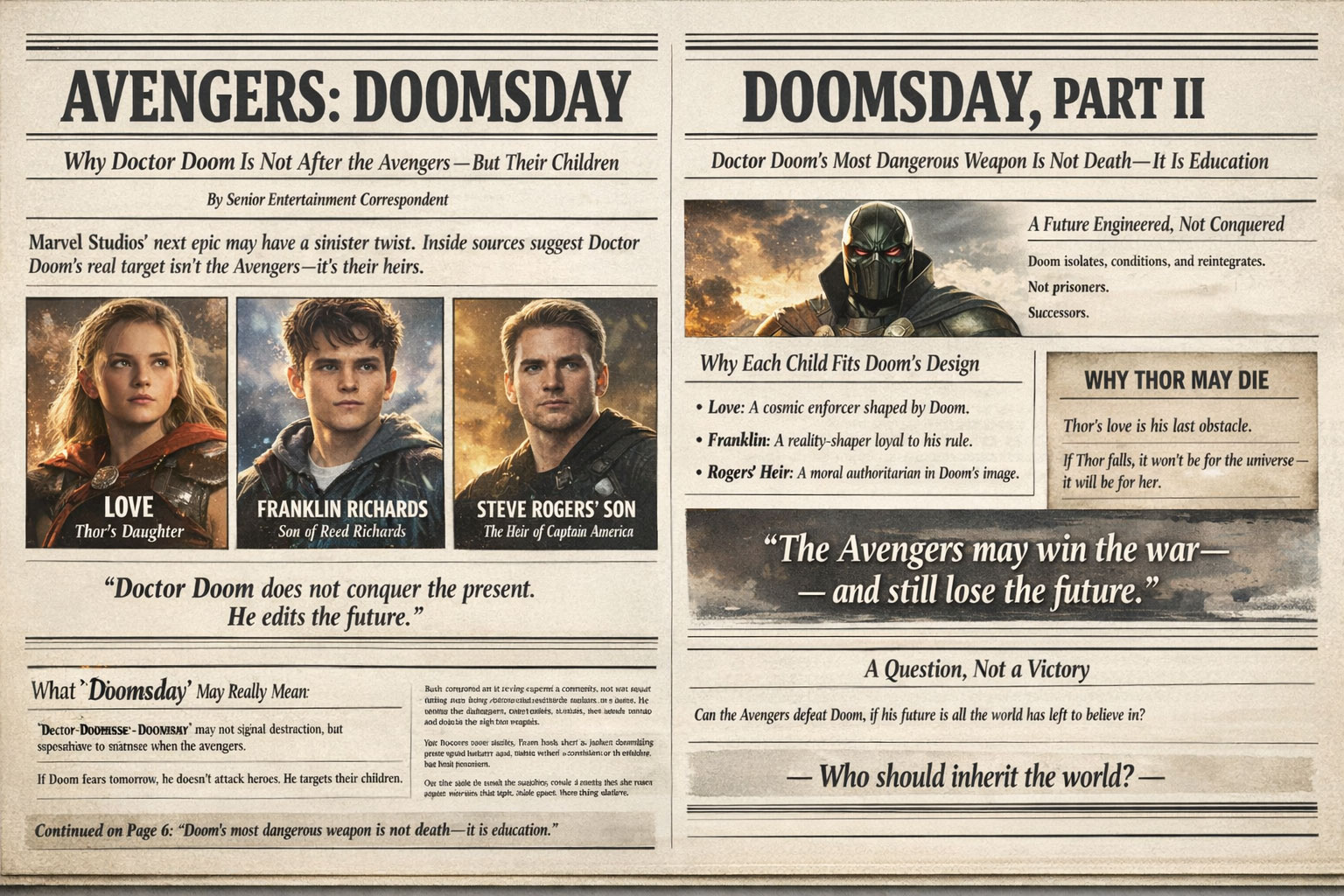
Equally significant is Marvel’s decision to foreground Love. The presence of a child in a veteran hero’s arc often signals legacy — a narrative mechanism that allows the story to continue even if the hero does not. Love is not merely motivation; she is continuity. Her role makes it possible for Thor’s story to end without feeling unfinished.
Why Thor is uniquely vulnerable
From a franchise perspective, Thor occupies a precarious position. He is one of the last remaining pillars of the original Avengers era, yet his arc has already traveled through loss, exile, identity collapse, and renewal. In narrative terms, his story has reached thematic completeness.
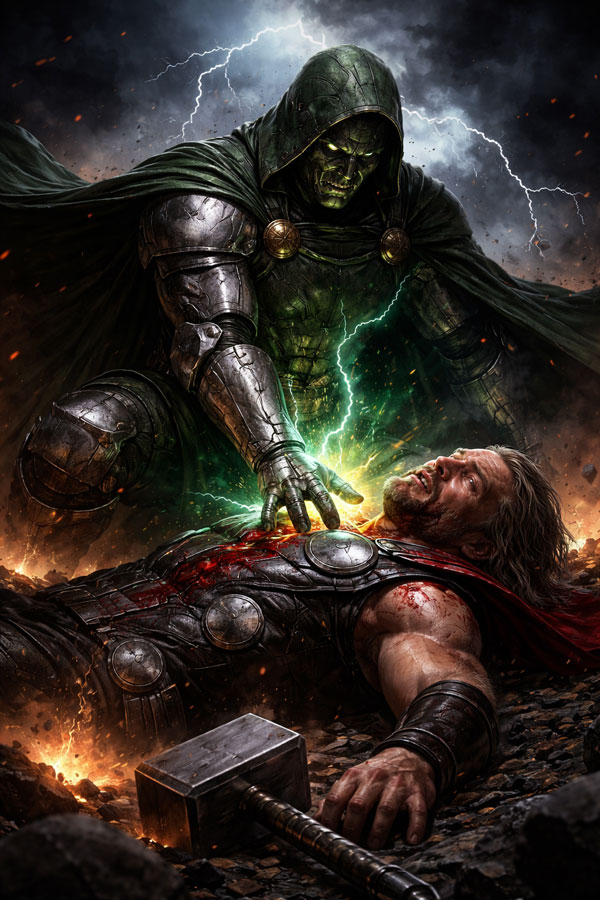
If Avengers: Doomsday is meant to reset the Avengers as a credible force after years of multiverse abstraction, the film must reintroduce stakes that feel irreversible. Killing a secondary character would not accomplish that. Killing Thor would.
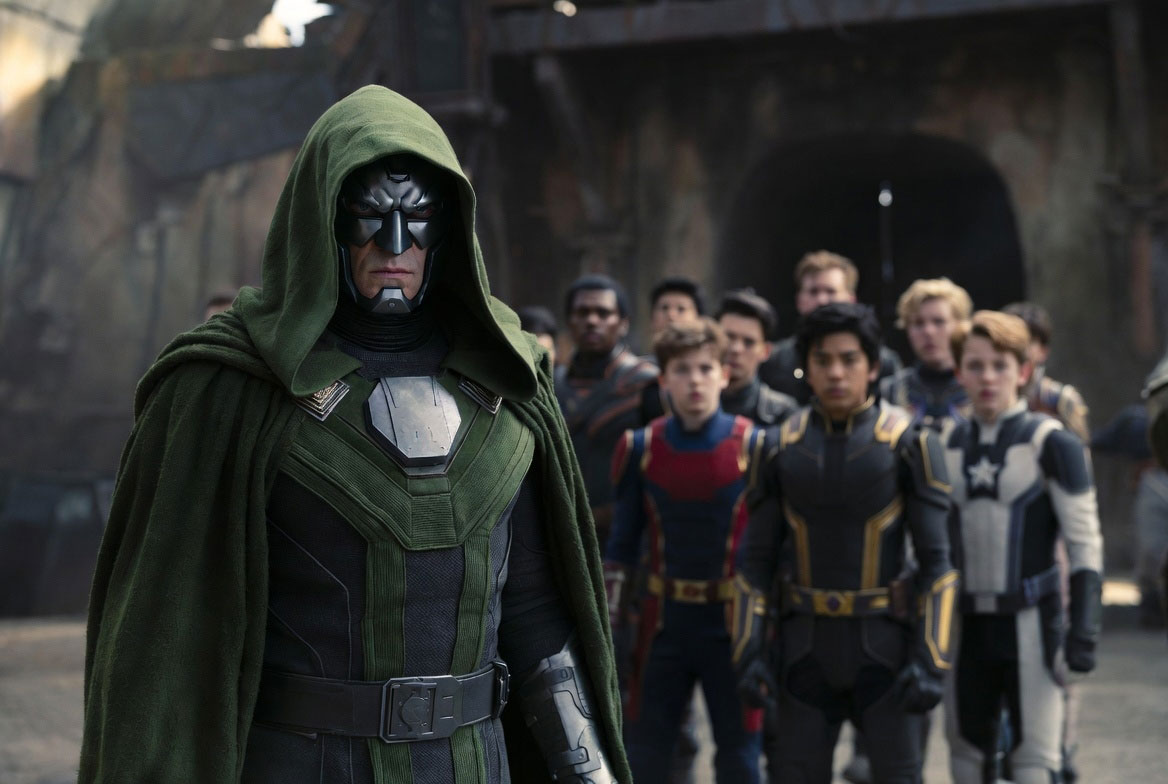
There is also the matter of Doctor Doom. Doom is not a villain who merely threatens; he demonstrates dominance. For Doom to emerge as the defining antagonist of the next saga, he must take something the audience still values. A Doom who leaves every Avenger intact risks feeling theoretical rather than terrifying.
The suspicious comfort of “Thor will return”
The phrase “Thor will return” is central to the trailer’s unease. Historically, Marvel has used such assurances after major character exits, not before them. Including it in promotional material reads less like celebration and more like pre-emptive reassurance — a way to soften an outcome that Marvel knows will provoke backlash.
In the modern Marvel playbook, death rarely means permanent absence. Variants, flashbacks, and future crossover logic ensure that no character is ever truly gone. But that does not negate the emotional weight of an on-screen death. Instead, it allows Marvel to deliver loss without closing the door entirely.
In that sense, “Thor will return” may not contradict the death theory — it may quietly accommodate it.
Thor will die?
Marvel has not confirmed Thor’s fate, and trailers are famously designed to mislead. But the language, tone, and emotional architecture of the Doomsday teaser all point in one direction: preparation rather than promise.
Thor is framed as a man making peace with uncertainty. The story emphasizes what he would leave behind rather than what he might gain. These are not neutral storytelling choices. They are the narrative grammar of goodbye.
If Thor does die in Avengers: Doomsday, it will not be framed as shock. It will be framed as meaning.
A reckoning for the Avengers
The implications of Doomsday extend beyond Thor alone. The title itself suggests an event, not a skirmish. Marvel has historically reserved large-scale loss for moments of structural transition — Infinity War fractured certainty, Endgame closed an era. Doomsday appears positioned to do both.
It is increasingly difficult to imagine a version of this film in which every Avenger survives. A clean victory would undermine the very premise Marvel is trying to restore: that actions have cost, and heroes are not guaranteed immunity.
This does not mean indiscriminate slaughter. Marvel tends to be selective. Characters whose arcs are complete, who embody mentorship or legacy, are far more exposed than those still being developed. One or two carefully chosen deaths would recalibrate the universe far more effectively than spectacle alone.
In that context, Thor’s vulnerability feels less like coincidence and more like design.
The quiet message behind the thunder
The Avengers: Doomsday trailer works because it does not shout. It whispers. It asks the audience to lean in, to feel unease, to sense that something is about to be taken away.
Whether Thor lives or dies, the trailer’s success lies in restoring a feeling Marvel has struggled to maintain since Endgame: fear of loss.
If Doomsday is meant to matter — truly matter — then some Avengers will not walk away from it. And the trailer strongly suggests that Thor may be the first name audiences must prepare to say goodbye to.








 English (United States) ·