
 3 years ago
872
3 years ago
872 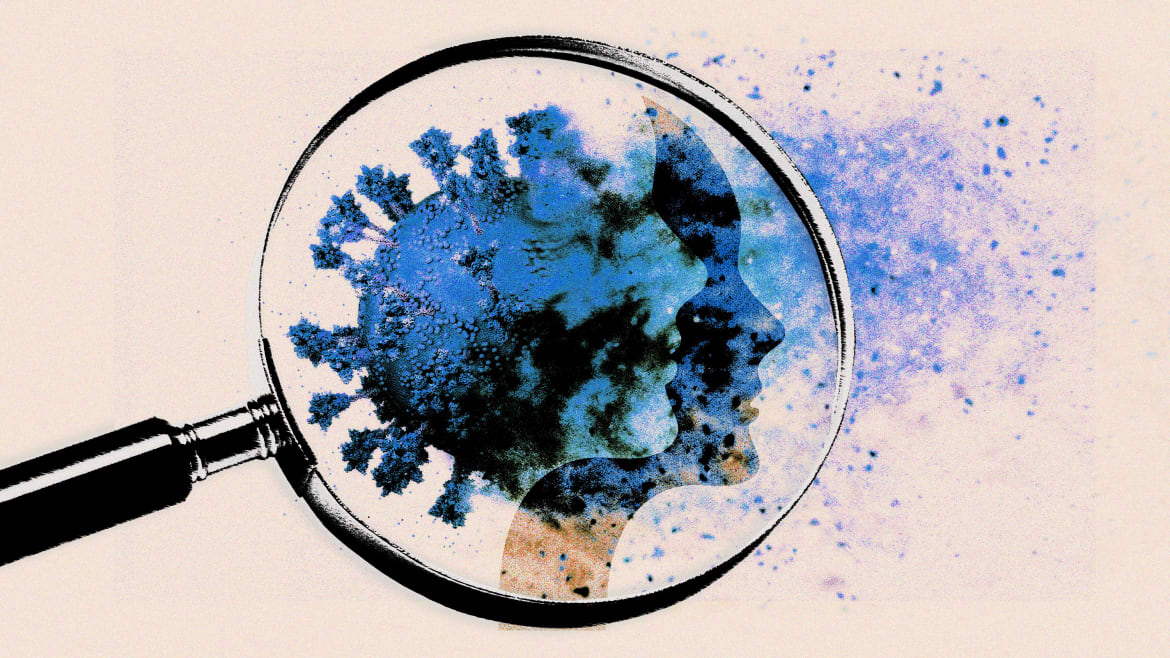 Photo Illustration by Kelly Caminero / The Daily Beast / Getty
In April, Marc Johnson, a molecular virologist from the University of Missouri School of Medicine, noticed something startling in the wastewater around Columbus, Ohio: High levels of a previously unknown, significantly mutated lineage of SARS-CoV-2, the virus that causes COVID-19. Not only was the lineage very different from any of the commonly circulating variants, it was a B.1.1 derivative, suggesting the person had been infected for more than two years. Adding to the mystery is the rate at which the affected individual is shedding the virus—exponentially higher than the average person infected with SARS-CoV-2.
Johnson told The Daily Beast that while the individual doesn’t pose a threat to the public, their own health “is likely affected.” He recently laid out his calculations on Twitter, writing: “I do not know of any persistent infections that shed this much virus without killing the patient… The closest would probably be [Hepatitis C], an infection that often ends in liver cancer.”
The lineage has only been detected in two Ohio sewersheds: one in Columbus, and the other in a city about 40 miles away called Washington Court House. Based on the fact that the lineage is always present in the Columbus Southerly sewershed, but not always at the Washington Court House (WCH) sewershed, Johnson assumes the individual he and his team are looking for lives in Columbus and travels to Washington Court House somewhat regularly, possibly for work.












 English (United States) ·