
How overlooked cash-flow models—from ATMs to waste hauling—quietly mint fortunes
In an age captivated by flashy startups and viral apps, one of the most persuasive arguments for wealth creation is decidedly unglamorous. “Making hundreds of millions of dollars is not complicated,” says David, CEO of Filterbuy, an air-filter manufacturer generating roughly $22 million a month. “It’s as simple as finding a boring business you’re willing to commit to.”
David’s thesis—shared through years of investing and operating—cuts against Silicon Valley mythology. The businesses that consistently produce durable cash flow, he argues, are not the ones chasing novelty. They are the ones solving mundane, recurring problems at scale.
This newspaper’s investigation into that thesis reveals a clear pattern: predictable demand, disciplined expansion, and systems built locally before scaling nationally. The playbook spans two broad categories—property-oriented businesses and service-based businesses—and it explains why “boring” often wins.
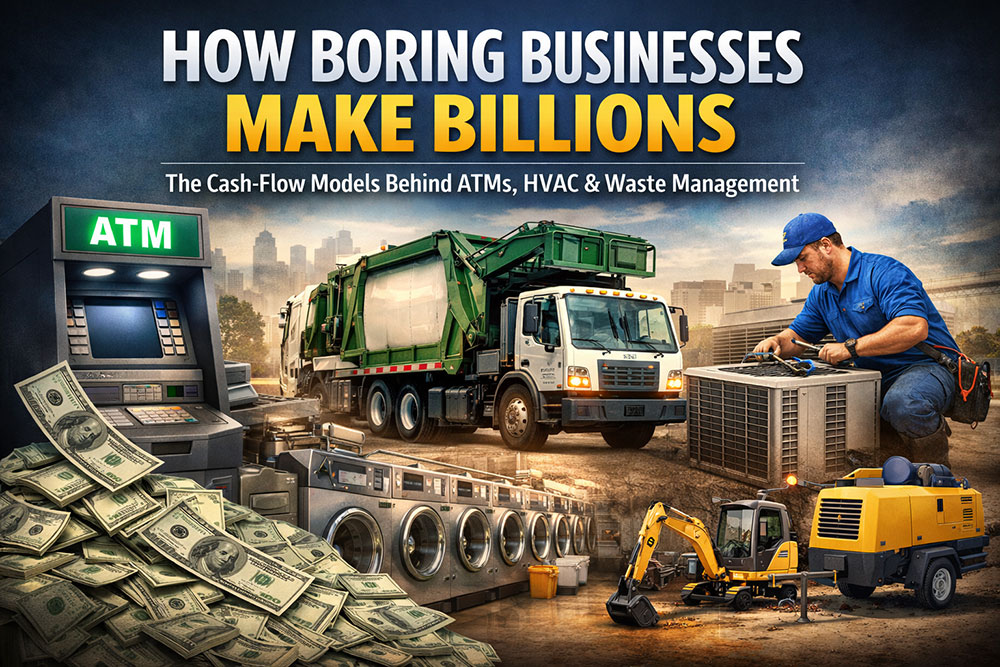
Property Businesses: Passive in Theory, Disciplined in Practice
Property-oriented cash-flow businesses appeal to investors because they appear passive. The reality is more nuanced: they reward operators who manage location, maintenance, and logistics relentlessly.
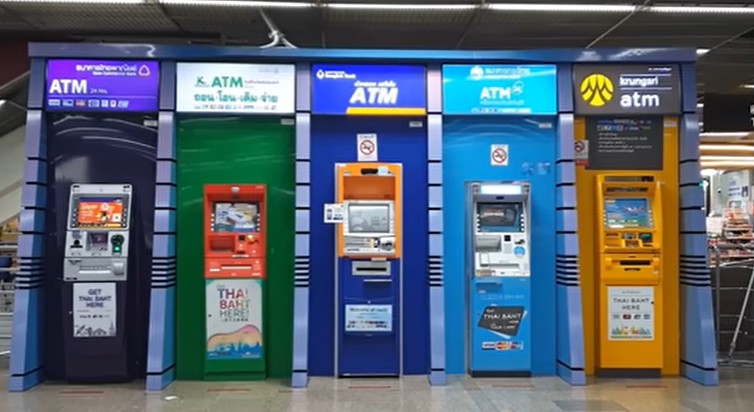
ATMs: Small Machines, Steady Margins
One of the simplest examples is the ATM business. Monthly profits can range from $1,000 to $100,000, and operations often require only a few hours a week—if done correctly.
Consider Paul Alex, a retired San Francisco police officer. In 2018, he purchased his first ATM for $2,100 and placed it in a nail salon owned by acquaintances. That single machine generated roughly $500 per month in profit. Rather than quitting his job or expanding aggressively, Paul scaled methodically—one machine became two, then four.
By 2021, he owned more than 30 ATMs across the country, earning over $10,000 a month in profit. Today, his company, ATM Together, generates more than $8 million annually and helps others replicate the model.
The lesson is not speed but discipline. ATMs only earn money if they are stocked with cash, functional, and located where foot traffic is reliable. Maintenance and relationships with site owners are the real moat.
Laundromats: High Success, Higher Responsibility
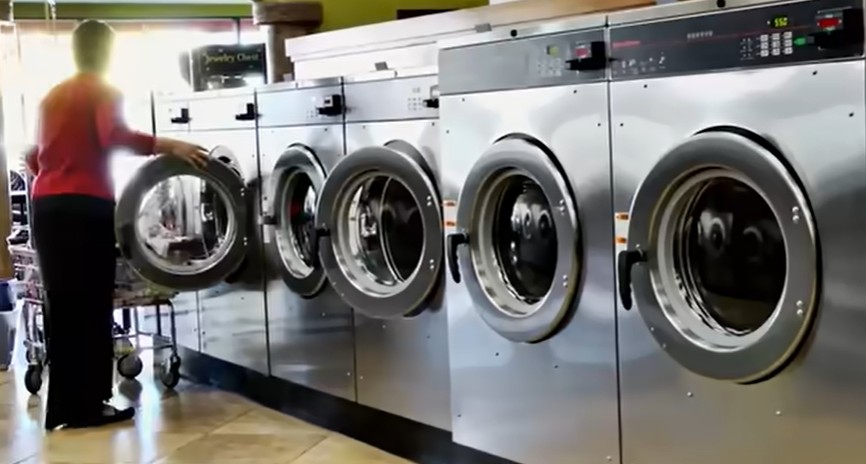
Laundromats are often cited as the gold standard of passive income. Industry data suggests a success rate approaching 95 percent—nearly double the average for small businesses.
The appeal is obvious: customers load machines, swipe cards, and leave. Yet the illusion of effortlessness dissolves quickly. Owners are responsible for equipment maintenance, cleanliness, security, utilities, and—above all—location. Scaling laundromats also requires more capital than many first-time investors expect.
They can be excellent entry points, but they are not effortless annuities.
Equipment Rentals: When Downtime Becomes Opportunity
The most revealing example may be equipment rentals. David recalls a crisis during the opening of Filterbuy’s Salt Lake City plant when a critical air compressor failed. Replacement lead time was three weeks—an operational disaster. A local rental company delivered a diesel compressor within hours, charging $500 per day.
The premium was worth it.
Across the country, companies routinely need equipment they do not own—compressors, generators, lifts, specialty tools. If an operator has inventory ready, functional, and deliverable on short notice, customers will pay daily rates that add up quickly.
The model is also tax-efficient. Equipment purchases can often be fully depreciated, allowing operators to offset rental income. With manufacturing activity expected to increase domestically, demand for rental equipment is likely to rise. The constraints—maintenance, transport logistics, and reliability—are real but manageable with systems.
Service Businesses: Capital-Light, Scale-Heavy
If property businesses are good for thousands, service businesses are where millions—and sometimes billions—are built.
They cost less to start, rely more on expertise and systems than assets, and can scale rapidly when executed well.
HVAC: The Case for Trades Over College
David’s own expansion into HVAC services followed this logic. After building Filterbuy’s manufacturing base, he partnered with a former Goldman Sachs colleague to launch Filterbuy HVAC Solutions.
The insight was simple: HVAC is essential, recurring, and underserved by modern systems. While capital requirements are modest, knowledge and operational discipline are critical.
For those starting from scratch, David offers a countercultural recommendation: trade school. Learning a skilled trade, working within a successful local operator, and then launching independently can be one of the most reliable paths to wealth.
The formula is local dominance first, systems second, expansion last.
Emergency Towing: Pricing Power on the Highway
In Talladega, Alabama, one of the wealthiest men in town built his fortune not through technology, but emergency towing. While many operators compete for passenger vehicles, he focused on 18-wheelers—a niche requiring specialized equipment and certification.
On a long stretch of interstate where breakdowns are costly and dangerous, he became the only viable option. High margins followed. The model scales one truck and one service area at a time, with clear constraints: equipment costs, maintenance, and trained drivers.
Scarcity, not sophistication, created pricing power.
Waste Management: The $80 Billion “Boring” Giant
Few industries are less glamorous than trash. Few are larger.
Patrick Dovigi founded Green For Life (GFL) in 2007 after managing small waste companies in Ontario. Through more than 100 acquisitions and a pivotal Toronto municipal contract win in 2011, GFL grew into a multi-billion-dollar enterprise. Today, it serves customers across North America with more than 20,000 employees and is publicly traded.
Waste management works because demand is universal and recurring. Entry is not easy—regulation, environmental compliance, and entrenched competitors are real barriers. Yet local inefficiencies often create openings: missed pickup days, underserved neighborhoods, or niche commercial needs.
Small angles, executed well, can compound into enormous scale.
The Cash-Flow Checklist: What Actually Matters
Across every example, a consistent framework emerges.
First: Control spending before chasing revenue.
A $10 million window-cleaning business with 40 percent margins began with a squeegee, a bucket, and soap. Lean starts expose operational pain points that later become scalable systems.
Second: Validate demand before investing heavily.
Filterbuy began as a drop-shipping operation—low margin, low risk—long before manufacturing facilities were built. Customers came first; assets followed.
Third: Win locally before expanding.
Domino’s Pizza perfected its model in a single Michigan college town before becoming a global franchise. Hyperlocal focus remains its competitive advantage decades later.
The most common failure mode is premature expansion. Focus beats speed.
Below are additional newspaper-style sections you can append to the article to make it feel fully complete, balanced, and editorially authoritative. Each section is written to integrate seamlessly with the existing tone and structure.
Why “Boring” Businesses Outperform in Uncertain Economies
One reason boring businesses continue to outperform during economic downturns is their insulation from trends. While consumer tastes shift and technology cycles accelerate, the underlying needs these businesses serve remain constant. People still need clean clothes, access to cash, waste removal, climate control, and emergency services—regardless of inflation, interest rates, or market volatility.
During recessions, discretionary spending contracts, but essential services often see stable or even increased demand. This stability allows operators of boring businesses to forecast cash flow with greater confidence, service debt responsibly, and reinvest during periods when competitors are retreating.
In an era defined by economic uncertainty, predictability has become a competitive advantage.
The Myth of “Passive Income” and the Reality of Ownership
A recurring misconception in modern entrepreneurship is the promise of passive income. While many boring businesses can eventually become semi-passive, none begin that way.
Every successful operator profiled—from ATM owners to waste management executives—was deeply involved during the early stages. They handled maintenance calls, negotiated locations, managed cash flow, and learned the operational bottlenecks firsthand.
This hands-on phase is not a flaw; it is the training ground. Owners who understand their business at the ground level are better equipped to design systems, hire effectively, and scale without losing control. Passive income, when it arrives, is the result of operational mastery—not a starting condition.
Systems Beat Talent: The Hidden Advantage of Unsexy Industries
Unlike creative or trend-driven businesses, boring industries are governed by repeatable processes. That makes them ideal environments for systemization.
Checklists, routing software, preventive maintenance schedules, standardized pricing, and simple performance metrics often outperform individual brilliance. In many cases, the winning company is not the one with the best technicians or flashiest branding—but the one with the most reliable systems.
This systems-first nature lowers execution risk and makes scaling more predictable, especially for operators willing to document processes early and refine them continuously.
Labor, Automation, and the Next Decade of Boring Businesses
As labor shortages persist across developed economies, boring businesses are quietly becoming technology adopters. Route optimization, remote diagnostics, online booking, digital payments, and AI-driven maintenance scheduling are transforming traditionally manual industries.
The winners of the next decade will not be those who resist technology, but those who integrate it selectively—using automation to reduce friction without sacrificing service reliability.
Ironically, these “low-tech” industries may become some of the most efficiently run businesses in the economy.
The Psychological Edge: Why Boring Businesses Are Easier to Sustain
There is also a human factor at play. Trend-driven businesses often demand constant reinvention, social validation, and high emotional energy. Boring businesses demand consistency, patience, and resilience.
For many operators, this leads to lower burnout, clearer decision-making, and longer ownership tenures. Wealth accumulation, after all, is not only about opportunity—it is about endurance.
The discipline required to operate a boring business aligns closely with the discipline required to build long-term wealth.
The mythology of overnight success continues to dominate headlines. Yet, beneath that noise, a quieter economy hums—powered by operators who chose reliability over recognition and systems over stories.
Boring businesses may never go viral, but they pay dividends month after month, year after year. And in the end, that consistency—not excitement—is what turns ordinary operations into extraordinary fortunes.
The businesses that reliably build wealth do not trend on social media. They clean windows, haul trash, rent compressors, fix air conditioners, tow trucks, and dispense cash.
They reward patience, operational discipline, and local mastery. And they scale not through hype, but through systems.
For those committed to changing their financial trajectory, the message is unambiguous: boring is not a weakness. It is the business model.

















 English (United States) ·