
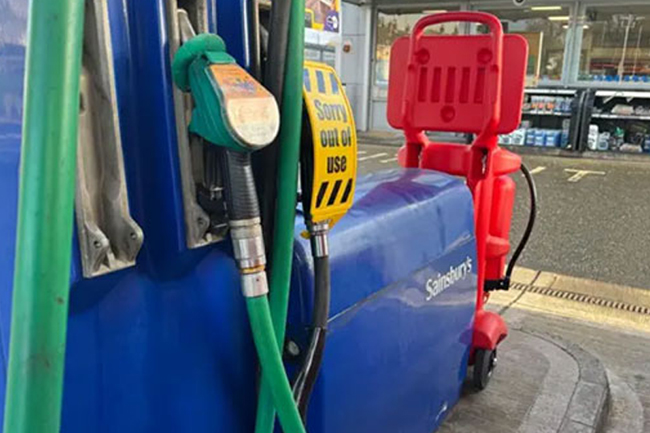
Sydney/Melbourne — Australian farmers are calling on city residents to reduce car use and switch to public transport as a regional fuel shortage continues into its second week, raising concerns about food production and supply chains.
The Victorian Farmers Federation (VFF) has urged commuters to leave their cars at home where possible, warning that fuel shortages in rural areas are becoming critical. The group says even small reductions in urban fuel use could help ensure farmers have enough diesel to continue planting and harvesting.

VFF President Brett Hosking said the impact of fuel shortages differs sharply between city and rural communities.
“For most people, it means inconvenience — cancelled plans or higher costs. But for farmers, timing is everything. If fuel runs out at the wrong moment, crops can be lost entirely,” he said.
The federation noted that Victorian farmers produce nearly a quarter of Australia’s food and emphasized that maintaining agricultural operations is essential for both domestic supply and global exports.
According to the VFF, if one in five commuters switched to public transport, the fuel saved could support the planting of a significant portion of Australia’s key crops, including wheat, barley, canola, and lentils.
The organization is also calling on the Victorian government to make public transport free temporarily and increase service frequency to accommodate higher passenger numbers.
Meanwhile, the NSW Farmers Association has raised similar concerns, warning that many rural members are experiencing increasing stress due to limited access to diesel and fertiliser supplies ahead of the winter sowing season.
A spokesperson said that while recent government discussions were encouraging, the situation on the ground remains serious.
“There is a disconnect between official statements and reality in regional areas. Independent fuel distributors are struggling to obtain supply from terminals,” the spokesperson said.
Despite these warnings, Federal Energy Minister Chris Bowen insisted that Australia’s overall fuel supply remains stable, stating that additional fuel is being directed to regional areas.
“Our fuel supplies remain solid, and rationing is not being considered at this stage,” he said.
However, farmers argue that the immediate issue is not national supply, but distribution, particularly getting diesel from fuel terminals to rural bulk suppliers.
The crisis has also reignited calls for long-term solutions, including developing domestic production of diesel and fertiliser to reduce dependence on global supply chains.
An emergency national cabinet meeting is scheduled for Thursday, as concerns grow over rising fuel prices and ongoing shortages that could impact both agriculture and the broader economy.












 English (United States) ·