
Aging is a complex biological process influenced by various factors, with chronic inflammation, or “inflammaging,” being a key driver. This persistent, low-grade inflammation accelerates aging and contributes to age-related diseases such as cardiovascular disease, diabetes, and neurodegenerative disorders. In this article, we will explore the molecular mechanisms of chronic inflammation, focusing on the roles of cytokines, lipid mediators, and mitochondrial health. We will also discuss emerging therapeutic strategies aimed at mitigating these effects to promote healthier aging.
Understanding Inflammatory Mediators in Aging
What Are Cytokines?
Cytokines are small signaling proteins that mediate immune responses. They can be broadly categorized into pro-inflammatory and anti-inflammatory types, with the former being particularly relevant in the context of chronic inflammation and aging.
• Molecular Mechanism: Pro-inflammatory cytokines such as TNF-α, IL-6, and IL-1β are produced by immune cells like macrophages and dendritic cells. They bind to specific receptors on the surfaces of target cells, triggering intracellular signaling pathways that lead to the activation of transcription factors such as NF-κB. NF-κB then enters the nucleus and promotes the expression of genes involved in inflammation, apoptosis, and cell proliferation. This process is essential for immune defense but, when chronically activated, contributes to tissue damage and aging.
• Visual Aid Suggestion: A diagram illustrating the cytokine signaling pathway, showing how TNF-α, IL-6, and IL-1β activate NF-κB and other transcription factors, could help clarify these molecular processes for readers.
What Are Lipid Mediators?
Lipid mediators are bioactive lipids derived from fatty acids that play crucial roles in inflammation and its resolution.
• Molecular Mechanism: Prostaglandins and leukotrienes are synthesized from arachidonic acid, a fatty acid found in cell membranes. This process is initiated by the enzyme phospholipase A2, which releases arachidonic acid from membrane phospholipids. Cyclooxygenase (COX) enzymes then convert arachidonic acid into prostaglandins, while lipoxygenase enzymes convert it into leukotrienes. These lipid mediators act on G-protein-coupled receptors (GPCRs) on the surfaces of target cells, leading to various inflammatory responses, including vasodilation, increased vascular permeability, and leukocyte chemotaxis.
• Visual Aid Suggestion: A visual representation of the arachidonic acid cascade, showing the synthesis of prostaglandins and leukotrienes, would be beneficial for understanding how these lipid mediators contribute to inflammation.
What Is Mitochondrial Health?
Mitochondria are the energy-producing organelles of the cell, critical for maintaining cellular health and function.
• Molecular Mechanism: Mitochondrial health is tightly linked to cellular energy production through oxidative phosphorylation, where electrons are transferred through a series of complexes in the mitochondrial membrane, culminating in the production of ATP. When mitochondria become dysfunctional, they generate excessive reactive oxygen species (ROS), which can damage mitochondrial DNA (mtDNA) and proteins. This damage triggers the release of pro-inflammatory signals like mitochondrial DNA and proteins into the cytoplasm, where they are recognized by the immune system as danger signals, further fueling chronic inflammation.
• Visual Aid Suggestion: A schematic of the mitochondrion showing the electron transport chain, ROS production, and how mitochondrial dysfunction leads to inflammation could be included to enhance understanding.
The Interplay Between Chronic Inflammation and Aging
What Is Inflammaging?
Inflammaging is characterized by a chronic, low-grade inflammatory state that develops with age.
• Molecular Mechanism: Inflammaging involves the persistent activation of innate immune responses, driven by factors such as cellular senescence, mitochondrial dysfunction, and the accumulation of damage-associated molecular patterns (DAMPs). Senescent cells, which accumulate with age, secrete a pro-inflammatory cocktail known as the senescence-associated secretory phenotype (SASP), which includes cytokines, chemokines, and proteases. These secretions contribute to a pro-inflammatory environment, exacerbating tissue damage and aging.
• Visual Aid Suggestion: A depiction of the SASP and its effects on surrounding tissues, including the recruitment of immune cells and the promotion of chronic inflammation, could be useful.
Mitochondrial Dysfunction and Chronic Inflammation: A Vicious Cycle
Mitochondrial dysfunction and chronic inflammation are interconnected in a vicious cycle that drives aging.
• Molecular Mechanism: As mitochondria become damaged, they lose their efficiency in producing ATP and begin to leak electrons, leading to increased ROS production. These ROS not only damage mitochondrial components but also activate pro-inflammatory signaling pathways, including the NLRP3 inflammasome, a multi-protein complex that plays a crucial role in the innate immune response. Activation of the NLRP3 inflammasome leads to the production of pro-inflammatory cytokines IL-1β and IL-18, perpetuating chronic inflammation.
• Visual Aid Suggestion: A flowchart illustrating how mitochondrial dysfunction leads to NLRP3 inflammasome activation and the resulting inflammatory cascade could provide clarity.
Therapeutic Strategies Targeting Chronic Inflammation and Aging
Anti-Cytokine Therapies
Anti-cytokine therapies involve the use of biologics to neutralize pro-inflammatory cytokines, thereby reducing inflammation.
• Molecular Mechanism: Monoclonal antibodies like infliximab and adalimumab target TNF-α by binding to it and preventing it from interacting with its receptors on target cells. Similarly, tocilizumab binds to the IL-6 receptor, blocking IL-6 signaling. These interventions reduce the downstream activation of inflammatory pathways, mitigating tissue damage and potentially slowing the aging process.
• Visual Aid Suggestion: A diagram showing how monoclonal antibodies bind to cytokines and prevent their signaling could help visualize the mechanism of action for these therapies.
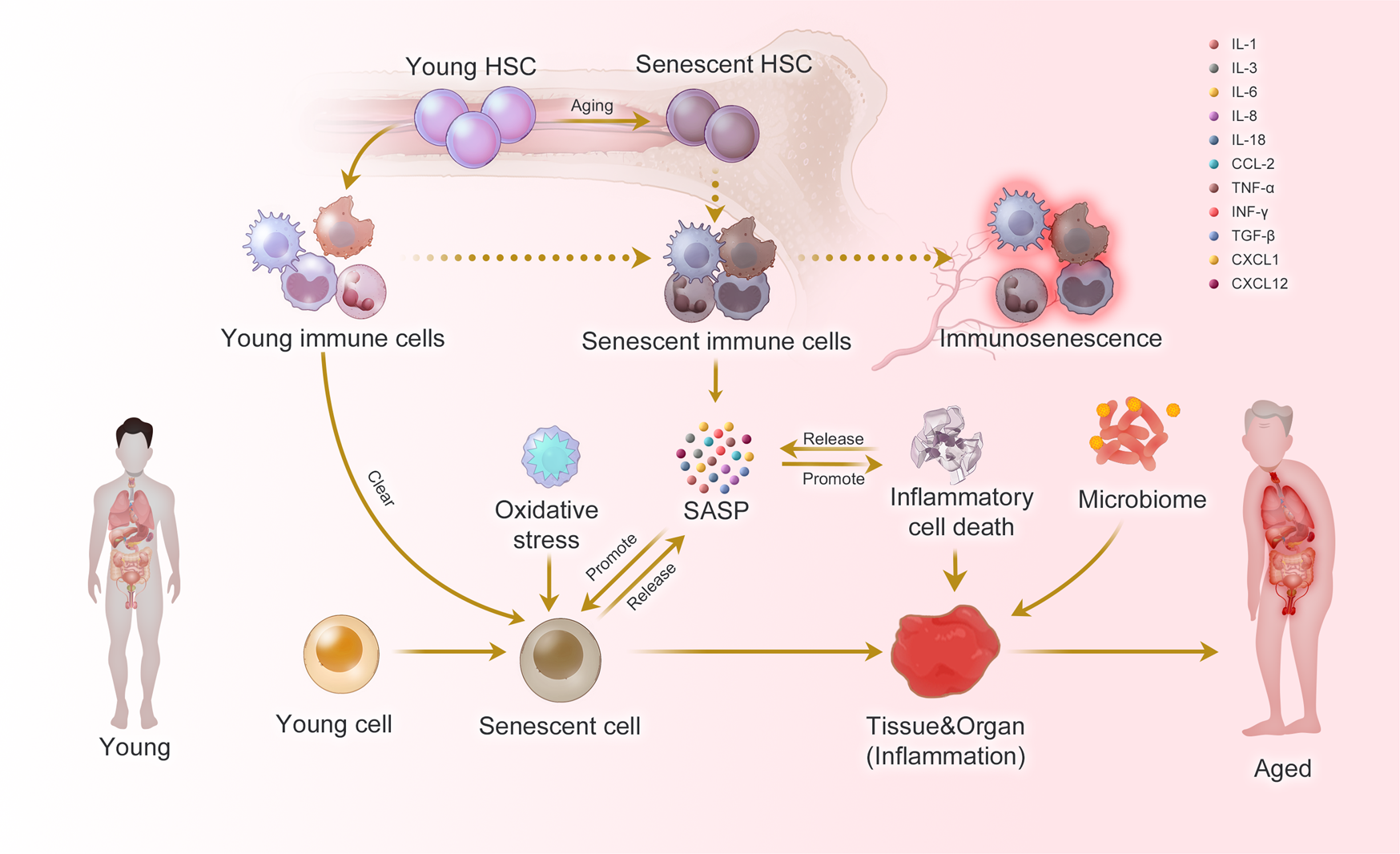
Inflammaging at the molecular, cellular, and organ levels. During the aging process, almost all cells in the body undergo senescence, a state characterized by a dysfunctional state and senescence-associated secretory phenotype (SASP). While immune cells play a crucial role in recognizing and eliminating these senescent cells, they are also affected by SASP, leading to a phenomenon called immunosenescence. Immunosenescence can impair the immunity to respond to infections and diseases, making the organism more vulnerable to illnesses. Moreover, the accumulation of senescent cells can trigger inflammation in organs, leading to organ damage and an increased risk of age-related diseases. This process is exacerbated by positive feedback loops that drive the accumulation of inflammation and organ damage, leading to further inflammation and an even higher risk of aging-related diseases...
Modulation of Lipid Mediators
Modulating lipid mediators through drugs like aspirin and other NSAIDs helps control chronic inflammation.
• Molecular Mechanism: Aspirin irreversibly inhibits COX enzymes, particularly COX-1 and COX-2, preventing the conversion of arachidonic acid into pro-inflammatory prostaglandins. This action not only reduces pain and inflammation but also has cardioprotective effects, making it a valuable tool in managing age-related diseases.
• Visual Aid Suggestion: A graphic showing how aspirin and NSAIDs inhibit COX enzymes, reducing the production of prostaglandins, could illustrate the pathway effectively.
NAD+ Boosters: Supporting Mitochondrial Health
NAD+ boosters are emerging as a promising strategy for enhancing mitochondrial function and reducing chronic inflammation.
• Molecular Mechanism: NAD+ is a critical coenzyme involved in redox reactions and is essential for the activity of sirtuins, a family of proteins that regulate metabolic pathways and stress responses. Sirtuins, particularly SIRT1 and SIRT3, play protective roles in mitochondrial function by promoting mitochondrial biogenesis and reducing oxidative stress. By boosting NAD+ levels, compounds like Nicotinamide Riboside (NR) and Nicotinamide Mononucleotide (NMN) enhance sirtuin activity, improve mitochondrial efficiency, and reduce inflammation.
• Visual Aid Suggestion: An illustration showing the role of NAD+ in sirtuin activation and mitochondrial health, along with the impact of NAD+ boosters, could be included.
Future Directions in Anti-Aging Research
Personalized Medicine in Anti-Inflammaging Strategies
As our understanding of chronic inflammation deepens, personalized medicine approaches that tailor anti-inflammatory therapies to an individual’s specific inflammatory profile are becoming increasingly important.
• Molecular Approach: Personalized medicine involves identifying specific biomarkers of inflammation and mitochondrial function in individuals, allowing for the customization of treatments that target these specific pathways. This approach not only optimizes the effectiveness of anti-aging therapies but also minimizes potential side effects.
Expanding Research on Mitochondrial Function
Further research into mitochondrial health and its role in chronic inflammation is essential for developing comprehensive anti-aging strategies.
• Research Focus: Understanding the molecular mechanisms by which mitochondrial dysfunction leads to chronic inflammation will enable the development of targeted therapies that address both the cause and effect of aging. This research is crucial for the development of interventions that can effectively slow or reverse the aging process.
Conclusion
Chronic inflammation, driven by a complex interplay of cytokines, lipid mediators, and mitochondrial dysfunction, plays a central role in aging and age-related diseases. By targeting these pathways through anti-cytokine therapies, modulation of lipid mediators, and NAD+ boosters, it may be possible to reduce the impact of inflammaging and promote healthier aging. As research continues to advance, these strategies offer hope for new, more effective anti-aging interventions that address the root causes of chronic inflammation and mitochondrial dysfunction.









 English (United States) ·